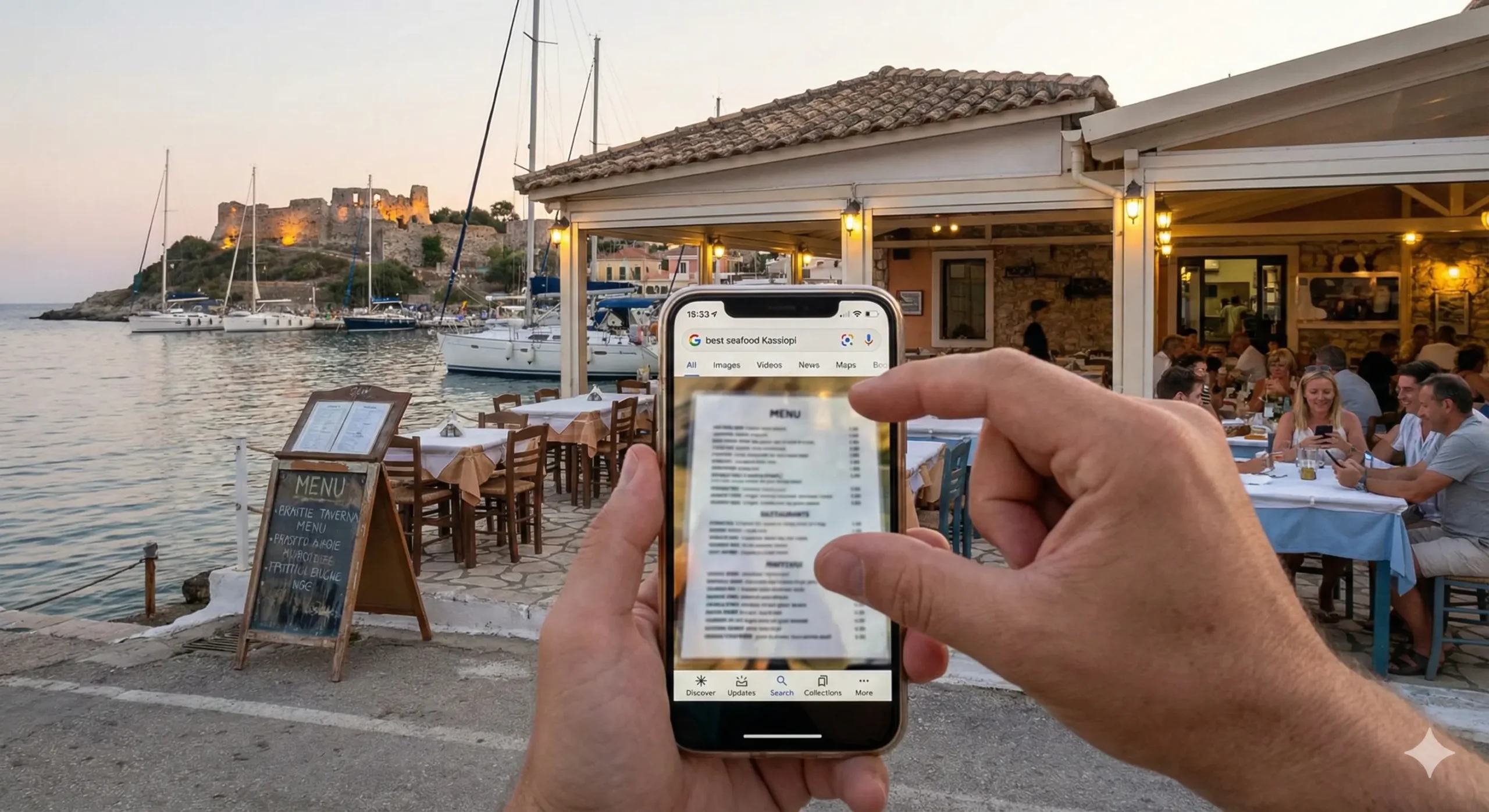
Imagine it’s mid-July in the Old Town. The heat is rising, and a tourist family from the UK is navigating the narrow kantounia looking for your restaurant. They are hungry, sweating, and holding their iPhone like a compass.
Google Maps says, “You have arrived.”
But they haven’t. They are standing 50 meters away, staring at a souvenir shop—or worse, the entrance to your competitor’s terrace. Frustrated, they put the phone away and sit at the first empty table they see. That isn’t yours.
You didn’t just lose a lunch service; you lost a €100 ticket, a potential 5-star review, and the algorithmic signal that tells Google, “People visit this place.”
In the boutique consultancy world, we don’t call this “bad luck.” We call it Geospatial Friction. And for the 2026 season, it is the single biggest threat to your walk-in revenue.
The Technical Truth: What is Geospatial Intelligence?
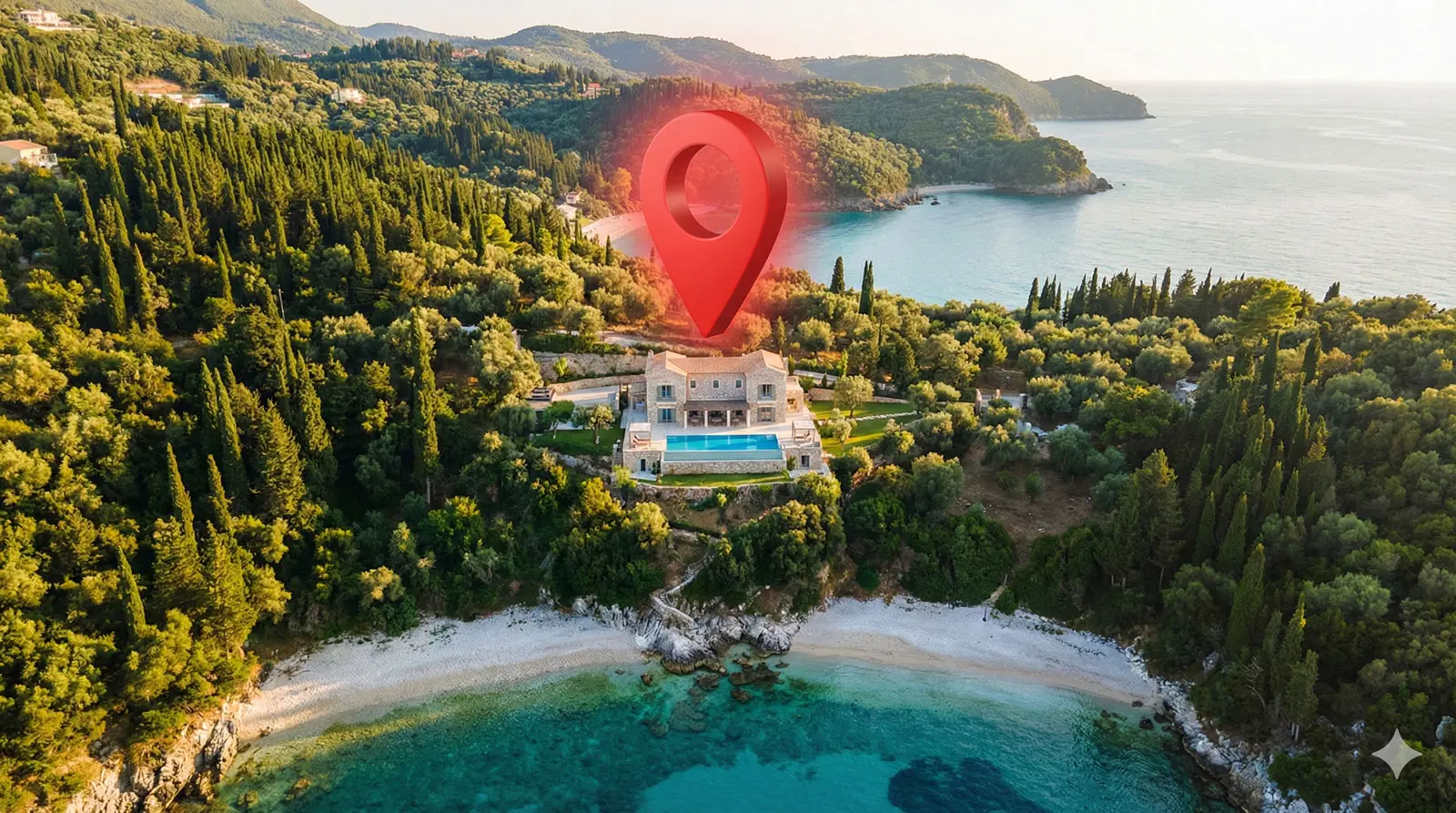
You might think your Google Map pin is just a digital dot. It’s not. In 2025, search engines evolved from using simple “centroids” (a dot in the middle of your roof) to Building Footprint Polygons.
Geospatial Intelligence now maps the exact geometric shape of your building. Algorithms calculate Proximity—the distance between the searcher and your entrance—with extreme precision.
If your digital footprint doesn’t match your physical reality, you suffer from Algorithmic Invisibility. Google’s local search algorithm relies on three pillars: Relevance, Prominence, and Proximity. If your digital pin is drifting into the Ionian Sea or down the street, you effectively tell the algorithm you are not the most convenient option for that “restaurant near me” search.
GPS accuracy is the new curb appeal. If the algorithm can’t trust where you are, it won’t risk sending a user to you.
The Business Impact: The Cost of a 50-Meter Error
This isn’t marketing fluff; this is technical infrastructure. Here is how a lack of geospatial precision attacks your bank account:
- You Are Losing High-Intent Traffic: 76% of people who search for a local business on their phone visit within 24 hours. If your location data is messy, Google filters you out to “mitigate risk” of a bad user experience. You don’t even get the chance to compete.
- The “Trust” Penalty: Data inaccuracy is a conversion killer. 93% of consumers report frustration when online information is incorrect, and 80% lose trust in the business entirely. If a tourist walks to the wrong spot because of your map pin, they don’t blame the satellite; they blame you.
- Broken Attribution Loops: Modern algorithms use “Store Visit Attribution” to connect ads to foot traffic. They use GPS signals (accurate to 1-meter) and Wi-Fi scans to confirm a guest entered your building. If your pin is off, Google doesn’t register the visit. If it doesn’t register the visit, it doesn’t prompt the user to leave a review later. You lose the review before the meal is even served.
The Solution: 3 Steps to Lock in Your Location
You don’t need a developer to fix this. You need to audit your digital assets with the same rigor you audit your inventory.
1. Audit Your “Pin Drop” vs. Building Polygon Open Google Maps and switch to satellite view. Zoom in as far as possible. Is the red pin floating in the middle of the street, or is it anchored exactly at your front entrance?
- Action: Log into your Google Business Profile (GBP). Select “Edit Profile” > “Location.” Drag the map marker until it sits directly on your doorstep. This helps algorithms that use “fine-location” GPS to verify visits.
2. Enforce NAP Consistency (Name, Address, Phone) Your business data must be identical across the web. If you are “Taverna Nikos” on Google but “Nikos Restaurant Corfu” on TripAdvisor, you are confusing the search engine.
- Action: Ensure your Name, Address, and Phone number (NAP) are character-for-character consistent. This consistency acts as a primary “Trust Signal” for ranking.
3. Optimize Your “Open Now” Status It sounds simple, but it is critical. “Being open at the time of search” is now cited as the 5th most influential ranking factor. Rankings degrade significantly in the last hour of operations because Google doesn’t want to send users to a closing kitchen.
- Action: Update your hours for the 2026 season now. If you stay open late for drinks, ensure your digital hours reflect that, or you will disappear from search results at 10:00 PM.
The Pitch
The digital architecture of Corfu is changing. The businesses that treat their Google Business Profile as their primary storefront—not an afterthought—will win the 2026 season.
Don’t let a drifting pin cost you a table.