Kassiopi Harbor, 8:30 PM
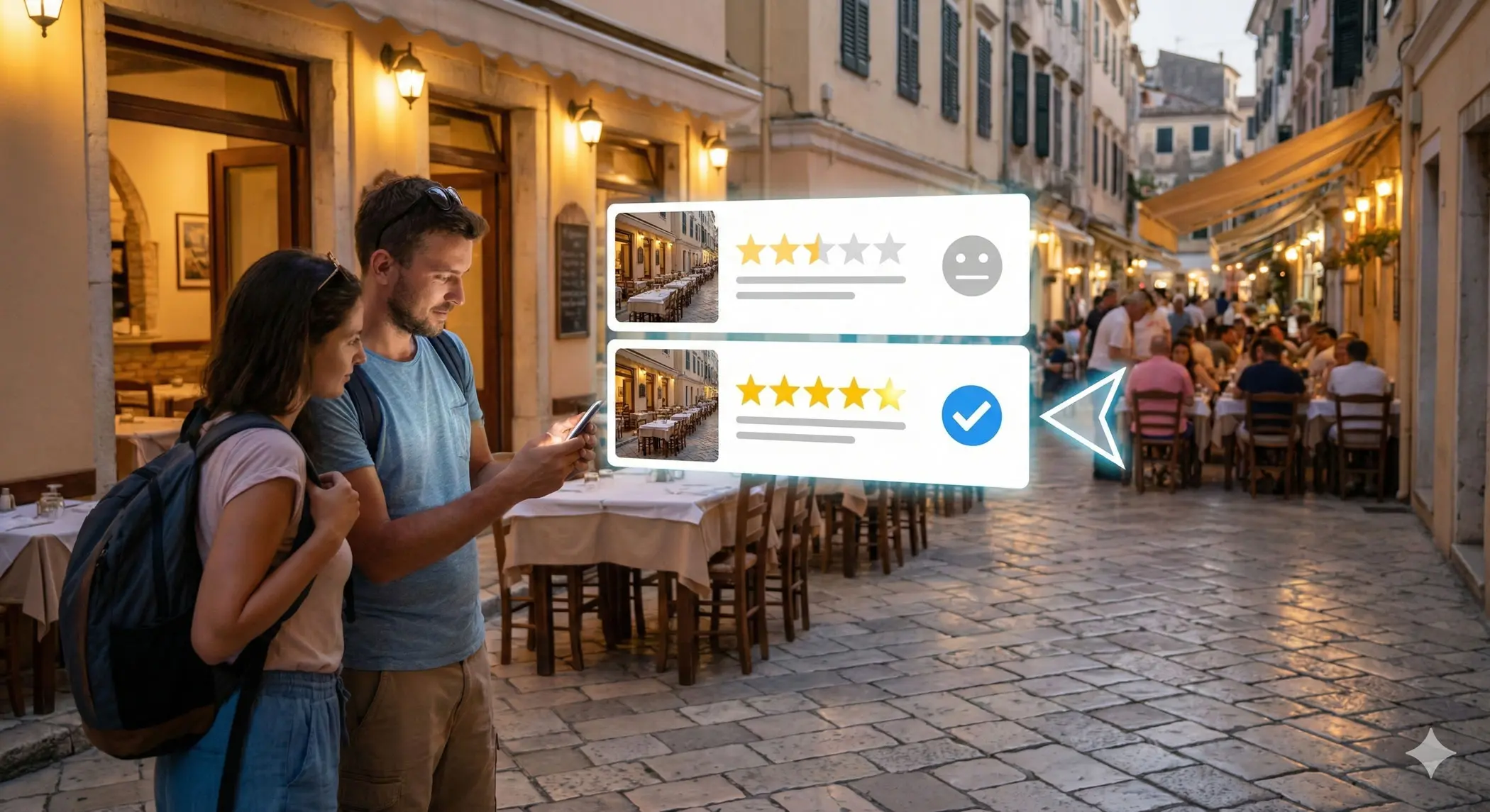
The sun has just set behind the castle ruins, and the lights of the harbor are reflecting on the water. A group of friends has just moored their rental boat after a day exploring the coves near Agni and Kalami. They are sun-tired, hungry, and craving fresh Fish Bianco or a rich Pastitsada.
They pull out their iPhones just as 90% of visitors do and search “Best seafood Kassiopi.”
Here is the brutal truth: If your menu is just a photo or a PDF file on your website, Google probably won’t show your restaurant. Why? Because Google reads text, it struggles to read pictures.
Even though you have the freshest fish on the quayside, your business is invisible to the search results. That group walks past your empty tables to the competitor three doors down, simply because their menu appeared on Google Maps. You just lost a €150 check without even knowing it.
The “Boarded-Up Window” Problem
Think of your website like your physical shopfront.
- A Text Menu is like a crystal-clear glass window. Google can see exactly what you serve (Sofrito, Pastitsada, Fresh Fish) and show it to hungry people.
- A PDF/Photo Menu is like boarding up your windows with wood. Google knows a building is there, but it has no idea what you are serving inside. So, it sends the customer somewhere else.
3 Ways “Photo Menus” Burn Money
- You Lose the “Dish Hunters. Tourists in the north don’t just search for “Food.” They search for specific cravings like “Vegan options Kassiopi” or “Grilled Octopus.” If those words are trapped inside a photo, Google can’t match them to the customer’s search. You simply don’t show up.
- The “Pinch of Death”. We have all been there. You click “Menu,” and a tiny, unreadable PDF loads. You have to pinch and zoom, drag left, drag right… It’s annoying. 53% of mobile users leave a site instantly if it’s hard to use. They won’t fight your menu; they’ll just go to the place with the easy-to-read list.
- It’s Not Inclusive. 1 in 10 users rely on screen-reading technology due to visual impairments. A photo menu is completely silent to them. Modern hospitality means being open to everyone—don’t lock the door on potential guests.
How to Fix It
You don’t need to delete your beautiful printed designs, but they shouldn’t be your only menu online.
- Step 1: Use the “Google Map” Menu. Don’t just upload photos to your Google Business Profile. Use the “Menu” tab to type in your dishes. This makes “Boat Rental with Skipper” or “Fresh Sea Bass” instantly searchable keywords.
- Step 2: Get a “Mobile-First” Website List. Ask your web developer for a menu page that fits the phone screen automatically. No pinching, no zooming—just scrolling. It’s faster, cleaner, and keeps the customer happy.
- Step 3: If a tourist has a spotty 4G signal while out on a boat, a huge PDF download will crash. A text menu loads instantly, capturing the booking while they are still out at sea.
The Bottom Line
The 2026 Season will be won by the businesses that make it easy to spend money.
Are you truly “Season-Ready,” or are you leaving cash on the harbor pavement?
Download the “Corfu 2026 Season-Ready Checklist”
Or Book a Strategy Call with Pixel Pioneer to fix your menu today.